
By Michele Moser, Sapphire Pools of Florida, Inc.
We are at the time of year when most backyard pools, condo pools, and resort pools have had more than their fair share of usage. The holidays in November and December bring families together in their swimming pools. In January and February, vacationers load up resort and condo pools. In March and April, the pools attract spring breakers. In and out of the pools go the swimmers. Covered in sunscreen. They pass right by the poolside shower without thinking about rinsing off. The pools, or as some call them “communal bathtubs,” will require lots of recovery treatment and attention.
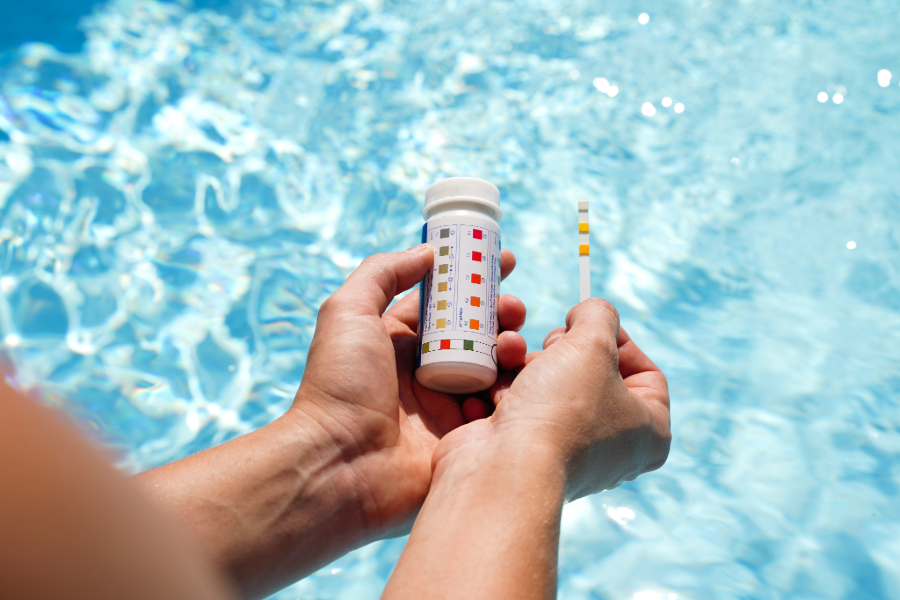
Maintaining safe, clean, and comfortable pool water is challenging during and after high bather loads. Pool water chemistry can change rapidly during these periods, and pool filters can clog, causing pumps to shut down. When pool and spa water quality becomes less than ideal, most pool owners and operators focus on free chlorine levels. However, testing for combined chlorine is equally critical, and often overlooked.
Understanding Combined Chlorine
Chlorine is the primary disinfectant used in pools, responsible for killing bacteria, viruses, and algae. However, not all chlorine in the water is equally effective.Free chlorine (FC) is the active sanitizer that keeps water safe. Combined chlorine (CC) forms when free chlorine reacts with contaminants like sweat, oils, urine, and debris. Total chlorine (TC) is the sum of both. Combined chlorine, often referred to as chloramines, is significantly less effective at sanitizing water and is a clear indicator that contaminants are present. To calculate combined chlorine, subtract the free chlorine from the total chlorine: (CC = TC – FC). Combined chlorine must remain very low: typically below 0.2–0.5 ppm. Exceeding this threshold indicates poor water quality and may require immediate corrective action, such as shock treatment or temporary pool closure. Ideally, we want the combined chlorine to be as close to zero as possible.
Why Combined Chlorine Matters
1. It reduces sanitizing efficiency.
When chlorine binds with contaminants, it loses its ability to disinfect effectively. High combined chlorine means less free chlorine is available to kill harmful microorganisms, increasing the risk of waterborne illness.
2. Health and Comfort Concerns
Combined chlorine is responsible for the strong “chlorine smell” often associated with poorly maintained pools. Contrary to popular belief, this odor signals insufficient effective sanitation, not excess chlorine.
Elevated CC levels can also cause:
- Eye and skin irritation.
- Respiratory discomfort (especially in indoor or heavily used pools).
- Dryness and redness for swimmers.
3. Indicator of Hidden Water Quality Issues
Combined chlorine acts as an early warning signal. Elevated levels suggest:
- High bather loads.
- Inadequate filtration or circulation.
- Organic contamination (sweat, sunscreen, debris).
- Insufficient oxidation (shock treatment).
Even if water appears clear, high CC levels indicate underlying problems that can quickly escalate if ignored.
4. Impact on Testing Accuracy
Combined chlorine can interfere with water testing results, making it harder to accurately measure free chlorine levels. Even small amounts (around 0.5 ppm) can distort readings and lead to improper chemical adjustments.
Why It’s Especially Important in Southwest Florida
- Southwest Florida presents ideal conditions for rapid chloramine formation.
- High temperatures accelerate chemical reactions and chlorine consumption.
- Intense UV exposure depletes free chlorine quickly.
- Frequent storms and debris introduce contaminants.
- Heavy pool usage (tourism, year-round swimming) increases organic load.
These factors make combined chlorine a likely suspect when analyzing and treating problems at the pools we maintain. Testing for combined chlorine is not optional, it is a critical component of responsible pool maintenance in Southwest Florida. While free chlorine ensures sanitation, combined chlorine reveals the hidden story of water quality.
Now let’s all go test our pools!